

Why is calcium, a seemingly mundane mineral, so crucial in the realm of medical research? Calcium assays unlock doors to understanding its extensive role in biological processes, ranging from muscle contractions to nerve impulses. This article delves into the significance of calcium assays, illuminating their pivotal role in scientific exploration. From deciphering cellular signalling pathways and aiding drug discovery to investigating cardiomyocyte function, calcium assays are indispensable. Grasping their importance allows researchers to unravel disease mechanisms, providing fresh insights into conditions such as cancer and neurodegenerative disorders. Read on to discover the transformative potential of calcium assays in advancing medical science.
Understanding Calcium Assays: Purpose and Importance
Calcium ions play a crucial role in numerous biological functions. They are integral to muscle contraction, nerve impulse transmission, and the regulation of heartbeats. Their involvement extends to blood clotting and bone mineralisation, underscoring their significance in maintaining physiological functions. As second messengers, calcium ions interact with proteins, altering their conformation and function, which is essential for cellular processes. These fundamental roles highlight the necessity for accurate detection and measurement of calcium levels within biological research.
- Signalling Pathways: Calcium assays are instrumental in elucidating cellular signalling pathways, offering insights into how cells respond to various stimuli.
- Drug Discovery: By using calcium assays, researchers can screen potential drug candidates and evaluate their effects on cellular calcium dynamics.
- Cardiomyocyte Function: Calcium assays assess heart cell function, aiding in the understanding of cardiac health and the development of treatments.
- Neurodegenerative Disorders: They assist in exploring calcium’s role in nerve cell function and its implications in diseases like Alzheimer’s.
- Cancer Research: Calcium dynamics are studied to understand tumour progression and the potential therapeutic targets within cancer cells.
Calcium assays are indispensable in understanding disease mechanisms, particularly in pathogenesis. They allow researchers to measure intracellular calcium fluctuations, which can signal cellular dysfunction or disease states. In neurodegenerative disorders, for instance, calcium dysregulation is often a hallmark, and assays provide a window into these alterations. Similarly, in cancer research, altered calcium signalling can indicate tumour aggressiveness and potential drug targets. By illuminating these pathways, calcium assays contribute significantly to the development of therapeutic interventions and the advancement of medical research.
Types of Calcium Assays and Methodologies
Calcium assay utilise diverse methodologies to measure calcium ion concentrations, each suited to specific research needs. These include colorimetric, fluorescent, and luminescent assays. By employing various detection techniques, researchers can gain detailed insights into calcium dynamics within biological systems. The choice of assay method depends on the desired sensitivity, specificity, and application context, allowing for tailored analysis of calcium-dependent processes.
Colorimetric Assays
Colorimetric assays operate on the principle of colour change upon calcium binding to specific reagents. These assays are straightforward and cost-effective, making them suitable for routine laboratory applications. They typically involve the use of chromogenic agents that produce a measurable colour shift proportional to calcium concentration. Commonly, these assays are used in scenarios where high throughput and immediate visual results are preferred, albeit with lower sensitivity compared to other methods.
Fluorescent Assays
Fluorescent assays employ calcium indicators that emit fluorescence upon binding to calcium ions. These assays are compatible with advanced detection equipment like fluorescent microscopes and plate readers, such as FLIPR. The development of Ca 2+ indicators, especially fluorescent proteins, has revolutionised cellular signalling studies. This method offers high sensitivity and allows for real-time monitoring of calcium flux in live cells, providing detailed spatial and temporal resolution of calcium dynamics.
Luminescent Assays
Luminescent assays utilise luminescent molecules that emit light in response to calcium binding. These assays are highly sensitive and offer a broad dynamic range, making them ideal for detecting low calcium concentrations. They are frequently used in high-throughput screening environments, where the need for rapid and accurate measurements is paramount. The benefits of luminescent assays include reduced background interference and the ability to multiplex with other luminescent assays, enhancing their versatility in complex experimental designs.
These methodologies collectively empower researchers to investigate calcium-related processes with precision. The choice of a specific assay type depends on the research objective, with each method offering unique advantages in terms of sensitivity, specificity, and applicability to various experimental conditions.
Protocols and Reagents in Calcium Assays
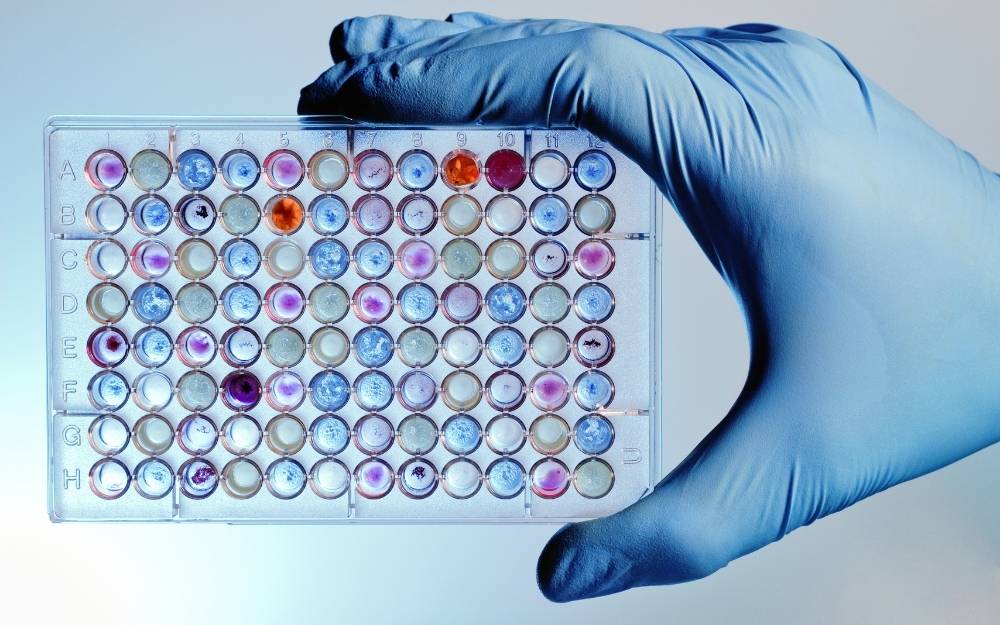
In calcium assays, the choice of reagents is crucial for accurate and efficient measurement of calcium dynamics. Commonly used reagents include Pluronic F-127, which is essential for enhancing the solubility and cellular loading of hydrophobic acetoxymethyl (AM) form indicators. This non-ionic surfactant helps integrate fluorescent dyes into cells, ensuring uniform distribution and reducing extracellular fluorescence interference. The Ratiometric Calcium Essentials Kit, for instance, offers a no-wash approach for ratiometric calcium flux assays, making it ideal for high-throughput applications. ION Biosciences provides a selection of fluorescent calcium assay kits, each tailored to meet the diverse needs of contemporary research, ensuring high sensitivity and specificity in calcium detection.
| Reagent | Function | Applications |
|---|---|---|
| Pluronic F-127 | Solubiliser for hydrophobic dyes | Enhancing cellular loading of AM form indicators |
| Ratiometric Kit | Enables no-wash ratiometric calcium flux assays | High-throughput screening and real-time monitoring |
| Fluo-4 AM | Fluorescent calcium indicator | Detecting rapid changes in intracellular calcium |
The protocol for conducting calcium assays typically begins with preparing cells and loading them with the appropriate calcium indicators. Factors such as the indicator’s loading efficiency and retention within the cell are critical. Pluronic F-127 is often utilised to improve the solubility of hydrophobic dyes, facilitating their incorporation into cells. Careful attention to experimental conditions, such as incubation times and temperatures, ensures optimal dye uptake and minimal background fluorescence. The use of controls, such as calcium ionophore-treated cells, helps establish baseline fluorescence levels and verify assay performance. By adhering to these protocols and selecting the right reagents, researchers can obtain reliable and reproducible data on calcium signalling pathways.
Data Interpretation and Troubleshooting in Calcium Assays
Interpreting data from calcium assays requires precision and understanding of the underlying biological processes. A robust microplate reader is essential, providing the sensitivity and rapid detection necessary for accurate measurements. When interpreting results, it is crucial to consider the context of the assay and the specific parameters measured. Techniques such as normalising data to control conditions and using ratiometric indicators can enhance interpretation by compensating for variables such as dye loading and cell health. Challenges often arise from background fluorescence and signal variability, necessitating careful calibration and control selection.
Troubleshooting issues in calcium assays often revolves around equipment and reagent performance. Equipment problems, such as alignment and calibration of microplate readers, can lead to inaccurate readings. Ensuring that the reader is properly maintained and calibrated is vital. Reagent issues, including improper dye loading and retention, can significantly affect results. The use of Pluronic F-127 can assist in improving dye solubility and cellular uptake. Additionally, employing controls such as calcium ionophores and chelators helps verify assay performance and identify potential reagent-related problems.
To enhance assay accuracy and reliability, several strategies can be employed. Bottom reading measurements are recommended for cell-based fluorescence assays to minimise interference from the cell culture medium. Using verapamil at low concentrations can be beneficial in certain assays to assess multiple parameters without affecting action potential duration. Regularly validating assay conditions and using a multifaceted approach to data analysis can further improve robustness. By addressing these aspects, researchers can achieve high precision and reliability in their calcium assay data.
Advancements and Applications in Calcium Assay Technology
Recent advancements in calcium assay technology have significantly enhanced the precision and scope of research in cellular signalling. The introduction of ratiometric dyes, for example, offers improved accuracy by providing two wavelengths of measurement, thus correcting for variables such as dye concentration and cell thickness. Wavelength analysis and simultaneous measurements have further refined the ability to detect subtle changes in intracellular calcium levels. These methodological advancements have been instrumental in advancing cell-based research, enabling scientists to explore complex biological processes with greater detail and reliability.
- Drug Testing: Calcium assays are employed in high-throughput screening to evaluate drug efficacy and safety, particularly in cardiotoxicity studies.
- Neuroscience: They aid in studying synaptic activity and neurotransmitter release, crucial for understanding brain function and disorders.
- Cancer Research: These assays assist in identifying calcium signalling pathways involved in tumour growth and metastasis.
- Cardiology: They support the investigation of cardiac arrhythmias and calcium’s role in heart failure.
Looking ahead, the field of calcium assay technology is poised for further innovation. Developments in miniaturisation and automation are expected to increase assay throughput and reduce sample volume requirements. Additionally, integration with other technologies, such as CRISPR gene editing, could open new avenues for studying calcium-related genetic modifications. These advancements hold the promise of more comprehensive insights into calcium dynamics and their implications for health and disease, further expanding the applications in medical research.
Final Words
Calcium assays play a crucial role in advancing cell-based research. They facilitate understanding of cellular signalling, drug discovery, and critical physiological processes. Their applications extend from investigating disease mechanisms like cancer to improving research methodologies through methodological advancements.
The varied types of calcium assays, including colourimetric, fluorescent, and luminescent approaches, highlight their adaptability. Detailed protocols and reagents ensure accurate results, while troubleshooting techniques improve reliability. As technology evolves, calcium assays become increasingly pivotal in cutting-edge research and medical applications. Embracing these advancements ensures that the potential of calcium assays continues to grow and offers promising prospects for scientific discovery.

A wellness writer with a focus on integrative therapy, holistic health practices, and physical rehabilitation. Clara specialises in making complex therapeutic concepts approachable through clear, actionable content.